
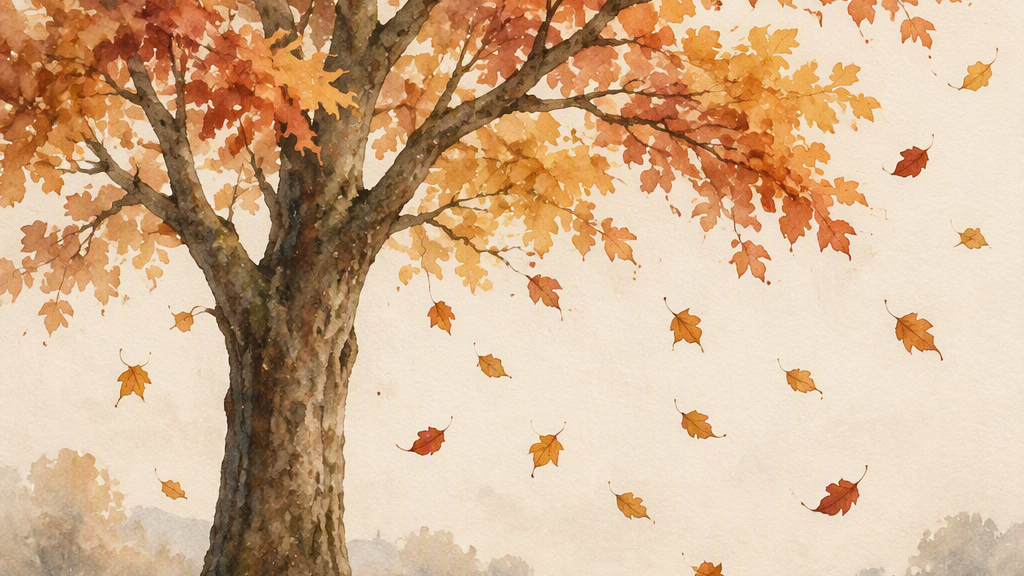
There is something about a change of season that invites us to notice.
The light shifts. The days change. The familiar rhythm of summer gives way to something new. It’s a time of turning inward.
Nature seems to understand something we sometimes struggle to accept: change is part of life.
Yet even when change is expected, welcomed, or something we chose, it can bring unexpected emotions.
A child leaves home. We retire from a career. A relationship changes. We move to a new community. Our health or abilities shift. A friendship ends. A dream we once held no longer seems possible.
We may be excited about what comes next and still feel sadness about what we’re leaving behind.
Both can be true.
We don’t always recognize grief
One of the most important things I teach through the Grief Recovery Method® is that grief isn’t limited to the death of someone we love.
Grief is the normal and natural emotional response to loss.
And there are many kinds of loss.
Sometimes we don’t recognize what we’re experiencing as grief because no one ever taught us to think about loss this way.
Instead, many of us learned how to get through it.
Keep busy. Be strong. Don’t feel bad. Give it time. Replace what was lost. Handle it on your own.
These are some of the common myths and messages about grief that we absorb throughout our lives.
Most are offered with good intentions.
But they don’t teach us what to do with the emotions connected to loss.
Time doesn’t do the work for us
We often hear that “time heals.”
But simply turning the pages of the calendar doesn’t necessarily resolve what was left emotionally unfinished.
We can move forward with our lives while still carrying regrets, resentments, things we wish we had said differently, or hopes that were never fulfilled.
Years may pass, yet something can happen that brings those emotions right back to the surface.
The Grief Recovery Method® offers a different approach.
Rather than waiting for feelings to disappear, the methodology provides specific action steps for identifying and addressing what remains emotionally incomplete.
It isn’t about forgetting the past.
It’s about changing our relationship with what we continue to carry from it.
Perhaps nature offers us a useful reminder
In autumn, trees release what they can no longer carry into the next season.
Maybe changing seasons can become an invitation for us to notice what we’re carrying, too.
Ask yourself:
What has changed in my life that I never really acknowledged as a loss?
What was I taught to do with difficult emotions?
Is there something from my past that still feels unfinished?
We don’t have to rush ourselves into the next season.
But we also don’t have to assume that time alone will take care of what hurts.
Sometimes moving forward begins by acknowledging what was lost, questioning what we were taught about grief, and learning the actions that can help us finally address what was left unfinished.
A new season doesn’t erase the one that came before it. It simply gives us an opportunity to decide what we want to carry forward.
Michele Mariscal, PhD has 30 years’ experience in the health and wellness field. She is a coach, author, and facilitator in soft skills (personality, communication, resilience). She is a Grief Recovery Method Specialist as well as a Trainer and Coach with the Institute of HeartMath. Her most recent publication is Growing Through Grief – The Alchemy of Healing from Loss. https://www.amazon.com/GROWING-THROUGH-GRIEF-Alchemy-Healing/dp/1791800246
